In this touching clip from The Dodo, we meet a miniature horse who is physically smaller than his canine siblings—the two golden retrievers he lives alongside. Right from the start, the title “Horse Is Smaller Than His Golden Retriever Siblings” sets up the kind of heart-warming contrast that catches your attention: typically one thinks of a horse as much larger than a dog; here, the roles are playfully reversed.
The video opens by introducing the horse—just how small he is, relative to his surroundings and his dog brothers. We see him trotting in with confidence, despite his size. Meanwhile, the golden retrievers lounge or romp nearby, larger in stature, but seemingly equally comfortable sharing the space. The visual story is clear: different species, different sizes—but one family, one home, and mutual affection.
What makes the clip especially compelling is not just the novelty of “a tiny horse and big dogs,” but the subtle emotional cues: the horse doesn’t act timid or subordinate. He engages, nuzzles, greets, plays. The dogs accept him, interact gently, and the humans in the background react with delight and affection. It’s a warm reminder that in many ways love, belonging and family aren’t just about size or species—they’re about connection.
One of the standout moments: the horse gives the golden retrievers kisses (licks or nuzzles). That act communicates more than words could: “I belong here. I’m part of this pack.” Meanwhile the dogs reciprocate, or at least tolerate the horse’s affection, showing the inclusive dynamics of this multi-animal household.
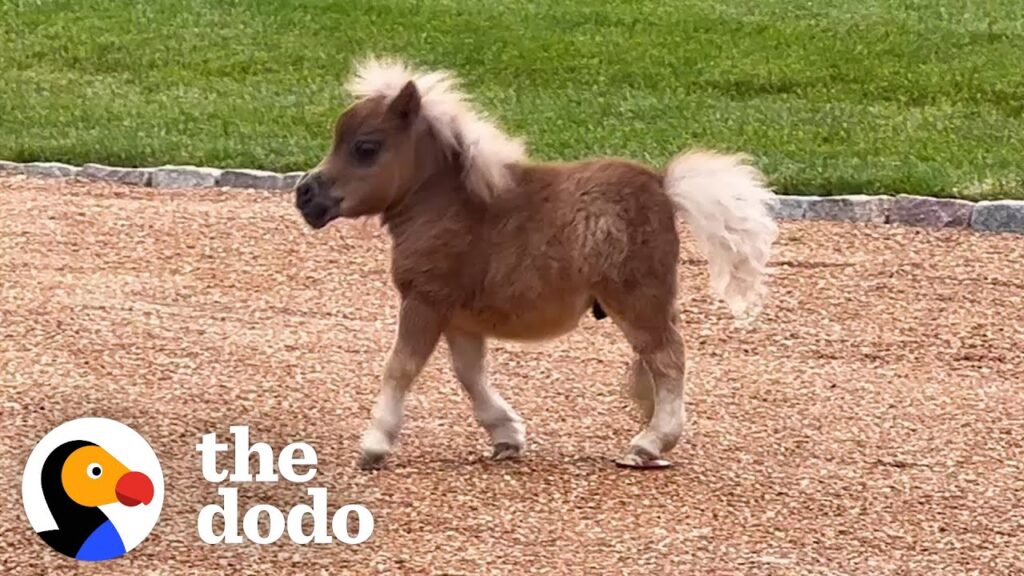
Another key theme is acceptance and identity. The horse, despite being smaller than expected, seems perfectly at ease in his role. He doesn’t act inferior; instead, his behaviour suggests he sees himself as one of the group—playing, moving, greeting. The golden retrievers don’t treat him like a fragile oddity—they treat him as a companion. That dynamic invites the viewer to reflect: how often do we marginalise someone (or something) simply because they don’t meet our expectations of size, species, or role? Here, we see that even when the “normal” order is reversed, harmony can emerge.
The setting also plays a role. This looks like a comfortable, well-managed environment, with all animals having space to move and interact. The humans filming seem supportive and encouraging of these interactions. That context matters: it shows how environment and attitude contribute to the wellbeing of animals in mixed-species homes. The trust between horse and dogs didn’t appear forced—it had been built. That underscores a practical point for anyone interested in multi-species households: time, respect, patience, and consistent positive interactions matter.
From a broader viewpoint, this video taps into what makes animal-videos viral: an unexpected twist (horse smaller than dogs), a visual contrast (size difference), a warm emotional core (friendship across species), and share-worthy moments (kisses, play, gentle companionship). It’s exactly the kind of wholesome viewing that many people turn to when seeking a “feel-good” break from heavier content online.
But beyond its entertainment value, there’s an educational sub-text. While we won’t claim to know all the background from just the clip, it does bring to mind how diverse animal personalities and relationships can be. Horses are often perceived as large, strong, perhaps even dominant animals. Dogs, especially golden retrievers, are friendly, social, family-oriented. Seeing a smaller horse adopt dog-like social behaviours (or at least integrate into a dog-centric household) invites curiosity: What breed is the horse? Is he a miniature or dwarf breed? What kind of socialisation did he receive? For viewers interested in animal welfare, these questions matter.
For instance, one might ask: when a horse lives among dogs, is his physical and psychological welfare accounted for? Does he get space to run, rest, graze as appropriate for his species? Are the dogs accustomed to the horse’s manners and size? The video implicitly suggests yes—but it also nudges us to remember that “cute” and “funny” depend on underlying responsible care.
For those thinking of doing something similar (keeping a miniature horse with dogs), a few practical tips emerge:
- Size & breed suitability: Make sure the horse is indeed intended for a smaller-scale life; miniature or dwarf horse breeds have different needs than full-size horses.
- Safe environment: The space should accommodate both species safely — e.g., no risk of the dogs accidentally harming the horse or vice versa due to size/strength mismatch.
- Socialisation: Introduce animals gradually, monitor initial interactions, reward calm positive behaviour and ensure no one is overwhelmed.
- Species-appropriate care: Even if they’re friends, horse care (hoof trimming, grazing, stable time) will differ from dog care (walks, vet visits, play). Balanced attention is key.
- Observe behaviour: Even friendly animals can misinterpret signals; size difference can create accidental stress (e.g., a playful dog paw or jump might frighten the horse). Having clear supervision helps.
Returning to the video: the emotional resonance is strong. As you watch the horse walk alongside the larger golden retrievers, you sense a subtle reversal of expectations. The dogs don’t dominate; rather, they appear as older siblings who sometimes guide, sometimes rest while their little brother trots alongside. The horse’s confident strut, the dogs’ relaxed acceptance, the human voice-over gently pointing out moments, all combine to craft a narrative: “Different, but equal. Big siblings and small sibling. Love is size‐blind.”
In many ways, the video is also a metaphor. It speaks to human relationships: siblings or friends who differ in size, age, strength or background. It invites us to celebrate difference rather than see it as a disadvantage. The phrase “smaller than his siblings” could easily apply to a younger human child among older siblings; yet here, because the siblings are dogs and the “younger” is a horse, the dissonance grabs our attention—and our heart.
Finally, in the context of digital media, this video typifies why people share animal-friendship content: it offers a moment of lightness, hope, connection. In a world that often feels fast, divided or stressful, watching a tiny horse snuggle with big golden retrievers reminds us of gentleness, inclusivity, joy.
If you’d like, I can pull some behind-the-scenes facts about the animals (breed, age, rescue background) or identify the exact names of the animals in the video. Would you like me to do that?