In the video titled “Tobi, štvrté miesto v ťažkom ťahu (Kľačianska podkova 2020)”, we witness a powerful demonstration of equine strength, presence, and tradition. The setting is the event known as Kľačianska podkova, held in Turčianske Kľačany, Slovakia, and the featured horse, Tobi, participates in the category of “ťažký ťah” (heavy pull). youtube.com
The Event & Setting
Heavy‐pull competitions such as this one are deeply rooted in agricultural and rural tradition. Horses are harnessed and tasked with pulling heavy loads—often sleds, logs or sledges—over a defined course or distance. These contests test not only raw strength but also stamina, steadiness, the partnership between human handler and horse, and often the training and breed characteristics appropriate for draft work. In the clip, we see Tobi taking part in this challenge, and importantly, securing a respectable fourth place (“štvrté miesto”). The video’s existence on YouTube allows us to glimpse how such traditional competitions still thrive, capturing interest not only locally but for broader audiences.
Tobi’s Performance
From the title we know Tobi achieved 4th place in the heavy‐pull category. While the video itself provides the visual context—how Tobi is prepared, how he lines up, how the load is attached, and how he executes the pull—it invites us to consider what factors might have contributed to that placing: the weight of the load, the condition of the horse, the terrain, competition level, and so on. Tobi’s effort is commendable: competing among a field of probably well‐trained heavy horses, achieving a top‐five result is significant. It shows that even if not the winner, Tobi is competitive and well‐capable.
Tradition & Cultural Significance
This event, Kľačianska podkova, is part of a tradition of equestrian and agricultural gatherings in central Europe where draft horses are celebrated for their strength and utility. The fact that the video was published and preserved suggests the value placed on showcasing such animals beyond pure labor—they are athletes in their own right, and major participants in a cultural event. For local communities, this type of competition is a way to maintain heritage, to bring together people of rural and equestrian backgrounds, and to celebrate human‑animal partnerships. Tobi and his handlers (the owner noted as Miroslav Šulava ml.) are part of that narrative. Pinterest+1
What the Video Shows – Observations
Watching the video, one might observe:
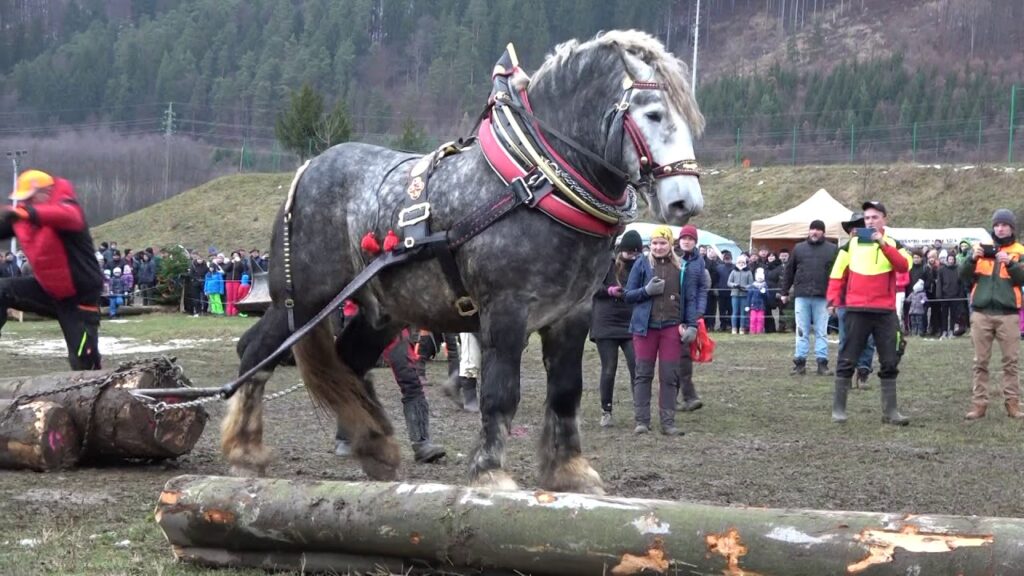
- Tobi’s build and musculature, appropriate for heavy pulling tasks: strong shoulders, solid tracing lines, perhaps draft‐type conformation.
- The equipment: harness, sled or load, the arrangement of the pull course—whether it’s flat or slightly inclined.
- The setting: spectators, the event layout, other competitors, weather/ground conditions.
- The moment of pull: how Tobi braces himself, how the handler cues him, the dynamic of movement—steady and powerful rather than speed‐oriented.
- The finish: how the load is brought in, how Tobi responds, how the award or ranking is announced or implied.
These details help the viewer understand not just the result (4th place) but the nuance of what is required: discipline, training, temperament.
Why Fourth Place is Not a “Just Participation”
Often, in competitions like this, finishing in the top places is a mark of honour. Fourth place means Tobi was close to the podium, likely outperforming many other competitors. It’s a strong sign of capacity and readiness. This result might encourage the owner/trainer to refine training, adjust load weights or technique, or aim for future events. For the audience, it shows a horse that is serious about its task—not just participating casually but performing at a high level.
Reflections on Training and Animal Welfare
It’s worth reflecting on how training for heavy pull events must balance the physical demands with animal welfare. The horse must be conditioned properly, the load must be appropriate, the surface fair, the pull must not unduly stress the animal. From the video, one hopes that Tobi is handled respectfully, with voice and body cues, harness adjusted correctly, no undue hardship. Videos like this can serve as both educational and promotional—showing that draft work remains alive, but also reminding participants and viewers of the responsibilities involved.
The Audience & Broader Appeal
Although this is a local Slovak event, the video taps into broader interests: livestock and draft horse enthusiasts, those curious about equestrian sport beyond racing, cultural heritage buffs, rural lifestyle admirers. Posting it on YouTube opens it to a global audience. For instance, someone in another country might watch and compare this with heavy pull events at home, or get inspired to attend or support such competitions.
Potential Takeaways for Viewers
- Admiration: Viewers get to see a fine horse (Tobi) working hard and achieving.
- Insight: One can learn about heavy‐pull competitions: what they are, how they work, what they require.
- Cultural connection: It’s a peek into the agriculture/equestrian tradition of central Europe.
- Motivation: For other handlers or owners, seeing a 4th‑place finish might motivate them to train or compete.
- Reflection: For non‑equestrian viewers, it might spark curiosity about draft horses, what they did historically (ploughing, hauling) and how they now perform in sport.
Summary Thoughts
In summary, the video “Tobi, štvrté miesto v ťažkom ťahu (Kľačianska podkova 2020)” is more than just a recording of a competition—it’s a story of a horse, a team, a tradition. Tobi’s fourth place is a tangible result of preparation, strength, and partnership. The event itself stands as a testament to the continuing value placed on draft horses in our age of mechanisation. For anyone interested in equestrian sports, animal performance, rural heritage or Slovak cultural events, this video offers a compact but rich experience.
If you like, I can also pull out a detailed commentary on the video minute‑by‑minute (e.g., what happens at 0:30, at 1:20, etc.), highlight training tips from the video, or compare Tobi’s performance with past winners. Would you like me to do that?