In the video titled Man Gets Karma After Stabbing Police Dog, viewers are confronted with a raw and high‑stakes moment of law enforcement, crime, and consequence. The title itself sets up three elements: someone who “stabs a police dog,” an unexpected “karma” consequence, and a sense of immediate justice. Right from the start, you know you’re about to witness something dramatic and morally charged.
The incident begins with a suspect who chooses to violently assault a law‑enforcement K‑9 unit dog — an act that, in the public eye, crosses a red line. Police dogs aren’t simply equipment; they’re trained officers, often revered in their community role. That the title places emphasis on “stabbing a police dog” signals both the severity of the act and the visceral nature of the footage. The phrase “Man Gets Karma” promises that the perpetrator doesn’t just walk away: a pay‑back moment is coming.
Watching the video, you’ll notice how quickly things can spiral. What may have been a crime in progress transitions into a confrontation with trained officers and a K‑9. The dog is attacked, the suspect is forced into reaction. The phrase “instant karma” (often used in these types of compilations) likely means that the suspect’s own actions lead to an immediate and visible negative consequence. Perhaps the dog defends itself, perhaps the suspect is detained or injured as a result of his actions. That turn from aggression to repercussion is the heart of the story.
One of the compelling aspects of this footage is the role of the dog. Law enforcement K‑9s occupy a unique space: part dog, part officer. Their training, discipline, and role in policing make attacking them not just an act of violence, but a challenge to authority, to law‑enforcement’s mechanism. The title explicitly draws this out. The moment the suspect strikes the dog, he has invoked not just the law, but the animal‑agent representing that law. Hence the viewer feels a heightened sense of injustice, and the viewer can root for the “karma” moment.
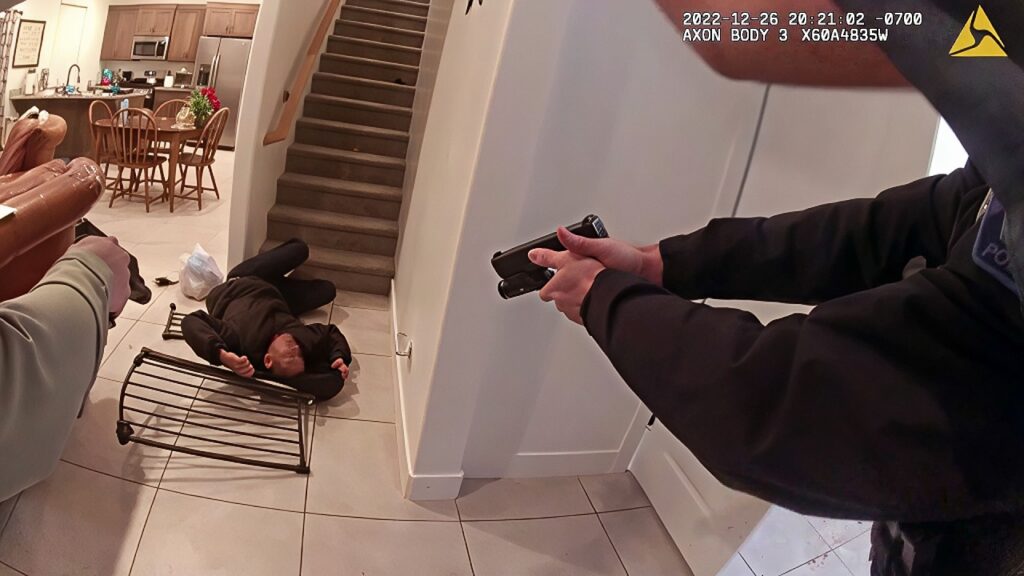
From a narrative perspective, the “karma” is what keeps viewers engaged. It’s more than “bad guy does bad thing.” It’s “bad guy does bad thing, and then something happens to him because of that.” The title primes the viewer: expect a payoff. The concept of “insta‑justice” resonates because in many real‑life cases, consequences are delayed or ambiguous. Here, the video claims immediacy. That makes it compelling and emotionally satisfying. The viewer is invited to witness retribution or a reversal of power: the criminal thought he had the upper hand, but the system (and the dog) flips the script.
But it also raises bigger themes. One is the idea of escalation: a suspect uses violence, the dog defends, officers respond — the situation swings from attack to arrest or capture. The title’s “stabbing” introduces serious violence; the “K‑9” suggests a trained entity; the “karma” promises accountability. This triangular dynamic – offender, law‑enforcement, consequences – makes the video both a crime‑narrative and a morality tale. It suggests that crime comes with risk, that attacking the agents of the law (even the canine ones) provokes a swift response, and that sometimes justice is immediate.
Another dimension is the emotional reaction for the viewer. Many people identify with the dog – as a victim of violence that many consider unjust. So when the “karma” moment arrives, viewers feel vindication. The title drives that expectation. From a psychological angle, the video allows the viewer to witness a form of restoration: wrongdoing → consequence. That arc appeals to our sense of fairness and justice.
It’s also worth noting how the title frames the story: “Man Gets Karma After Stabbing Police Dog” is blunt, clear, and dramatic. There’s no ambiguity about who acted, what they did, and that something happened as a result. The action (“stabbing”) is in the past tense for the perpetrator; the consequence (“gets karma”) is in the present/future tense for the viewer. It invites you to watch the outcome.
For content creators or channel strategy, the title works because it tells a story in just a few words. It’s keyword‑rich: “stabbing,” “police dog,” “karma,” “man gets” are all potent search terms or curiosity triggers. It promises real, unscripted footage. It also taps into categories that perform well: crime, law enforcement, K‑9 units, justice videos. If someone searches for “police dog attacked,” “officer K9 stabbed,” or “instant karma police,” this title sits well within that search space.
However, the title also sets a tone. Viewers will expect real violence, immediate action, and maybe graphic content. It’s important that the video content delivers on that promise, otherwise viewer satisfaction drops, and YouTube might penalize via lower watch time. So the match between title and footage is crucial.
From a broader ethical lens, the video invites reflection: What led the suspect to such violence? How did the dog and handler respond? Did the dog act without command or under order? What are the protocols when a K‑9 is attacked? The “karma” component simplifies the story into a moral snippet — you did wrong, you got caught — but underneath lies complex law‑enforcement, animal‑welfare, legal dimensions.
For the viewer, key take‑aways might include: the power of K‑9 units in policing; how quickly a violent situation can reverse when law‑enforcement is involved; the significant risk criminals take when escalating to violence against trained animals; and the emotional satisfaction many people feel when those who do harm face consequences. The video is not just entertainment — it’s a real‑world cautionary tale.
In summary: Man Gets Karma After Stabbing Police Dog delivers on multiple fronts — clarity of event, emotional hook, immediate consequence, moral satisfaction, and real‑world stakes. If you’re drawn to law enforcement footage, instant retribution clips, or K‑9 unit stories, this video hits the mark. It presents crime, confrontation, and conclusion in one clean story arc, and the title tells you exactly what to expect.