In recent days, tensions in the Caribbean region have escalated as the Venezuela-U.S. military dynamic moves into sharper focus. The United States Navy has announced that it is preparing to launch major military drills off Venezuela’s coast. This development follows a pattern of heightened U.S. maritime activity near Venezuelan waters, amid allegations of drug-trafficking operations, regional security concerns, and political rivalry.
The forthcoming exercises are designed to test forward presence, power projection, and joint operations in littoral (near-shore) environments. The U.S. Navy’s move is being perceived by Caracas as a provocative display of force, possibly aimed beyond mere anti-narcotics operations. Indeed, Venezuela has already voiced strong objections, calling U.S. warship visits and military build-ups “provocations” that threaten the sovereignty of the Venezuelan state. The Economic Times+2ABC News+2
From a U.S. perspective, the drills tie into a broader strategy of combating transnational crime, especially the trafficking of illicit narcotics via the Caribbean Sea. The U.S. has repeatedly asserted that its military presence in the region is part of an effort to disrupt criminal networks that exploit maritime routes. However, the proximity of U.S. war-fighting assets to Venezuelan shores naturally raises concerns about escalation and miscalculation. For instance, the arrival of the aircraft carrier USS Gerald R. Ford in the Caribbean was reported as a major U.S. buildup. ABC News+1
Venezuela’s response has already begun. Caracas has mobilised its forces, undertaken large-scale exercises, and warned that any foreign military action off its shore or on its landmass would be met with resistance. The government of Nicolás Maduro is framing the U.S. move as a threat of regime change under the guise of anti-drug campaigns. Reuters+1
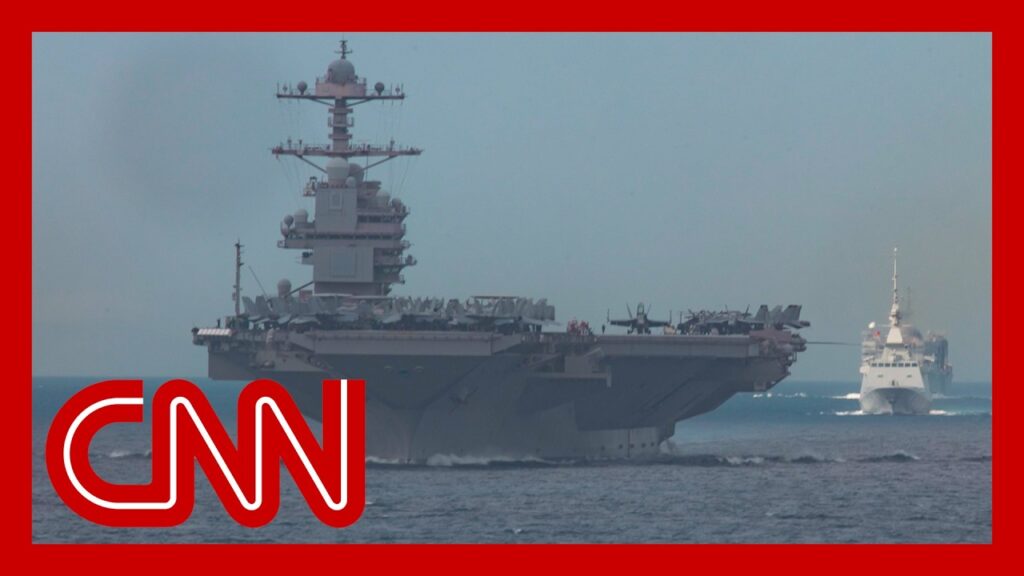
What makes this moment particularly delicate is the combination of maritime operations, rising political stakes and peer-to-peer signaling. The U.S. and Venezuela are engaged in a contest not only of military posture, but also of legitimacy, influence, regional alliances and political narratives. The U.S. wants to show it can operate effectively in the Caribbean basin, and deter illicit flows. Venezuela wants to showcase its sovereignty, rally domestic support and signal to external actors that any military pressure will not go unanswered.
For the U.S., conducting exercises off Venezuela’s coast has several operational benefits: it gives the U.S. Navy and allied forces training in littoral warfare, maritime interdiction, amphibious operations and combined arms in a contested environment. It also places U.S. forces closer to Latin American theatres of interest, enabling quicker responses and stronger presence. For Venezuela, the presence of foreign naval forces near its coast is inherently problematic, as it touches on national pride, territorial integrity, and regime survival.
While the stated U.S. goal is counter-narcotics and regional security, the optics cannot be ignored: large warships, fighter jets, helicopter operations, and complex drills near a politically unstable nation indeed carry a powerful symbolic weight. This raises the risk of misinterpretation, unintended encounters, and escalation—even if neither party intends open conflict. From a geopolitical viewpoint, regional actors are nervous. Neighbours such as Trinidad and Tobago have faced pressure regarding allowing U.S. warships into their waters, while symbols of U.S. force so close to Venezuela’s coast may provoke broader reactions. AP News+1
Another dimension is the broader Latin American reaction. Some governments may view the U.S. presence as legitimate under anti-drug operations; others will see it as an imperial or destabilising intervention. This could affect alliances, intelligence sharing and diplomatic relations — which in turn influence how safe or sustainable the U.S. drills will be. If regional sentiment turns against the U.S., logistical and strategic support may be harder to secure.
Turning to what to watch for:
- Scale and scope of the exercises: How many ships, aircraft, and personnel are involved? Are drills purely maritime, or do they include amphibious landings or special operations near Venezuelan territory?
- Location: Exactly how close to Venezuela’s coast will operations be? Will U.S. units enter Venezuelan-claimed waters? Will there be staging via nearby countries?
- Venezuelan response: Will Caracas escalate with mobilised forces, air defenses, militia deployment, or political declarations? What signalling will they send to the U.S. and their own public?
- Regional diplomatic fallout: How do neighbouring states and regional organisations (e.g., CARICOM) react? Will this lead to shifts in alliances or defence postures in the Caribbean and South America?
- Legal/operational risks: Will there be any incidents—such as misidentification, collisions, or escalation—that could spiral into broader conflict?
In sum, the upcoming U.S.-led major military exercises off Venezuela’s coast represent much more than a routine training event. They reflect layered strategic interests, contested regional sovereignty, and a potential flashpoint between a major power and a smaller but politically emboldened state. While the stated target is drug trafficking and maritime security, both actors are acutely aware that this is also a test of resolve, signalling and capability.
For viewers and analysts alike, the video link above (https://youtu.be/6BgRPjEoZTg) offers timely coverage of this unfolding drama — and is well worth watching to gauge how the drills are being framed, how the players are behaving and what might come next.
In conclusion, as the U.S. begins these large-scale operations in the Caribbean, the world should pay close attention. The setting is volatile: the U.S. wants operational readiness and regional influence; Venezuela wants to repel perceived threats and assert its autonomy. The space between routine exercise and unintended confrontation is narrow, and what starts as training could have far-reaching consequences for regional stability, maritime security and great-power competition in the Western Hemisphere.