From the start, the video captures your attention with the scale: a whole bull mounted on a steel spit. The sheer size gives you the impression that this is more than a meal—it’s an event. You can almost feel the weight of the animal, the metal framework, the fire beneath. What follows is a masterclass in slow cooking tradition, heavy on fire, steel, turning and patience.
The ambience: crackling coals, the bull rotating slowly, the meat’s surface gradually browning and crisping, fat rendering, juices collecting. Texturally you can imagine: the outer layer caramelising, the inside staying juicy. There’s something elemental about this kind of cooking—fire + flesh + time. The video leans into that, offering close-ups of sizzling, the embers, the metal spit, the carving. You feel the primal aspect of cooking.
What stands out is also the technique and the craftsmanship. The steel spit is robust; the setup likely required careful planning. The bull is secured, balanced, turned with controlled speed so that each side sees even heat. The fire is maintained at a steady intensity — neither too fierce to burn the outside prematurely, nor too weak to leave it raw. You see the cook managing coals, repositioning steel, checking the meat. It’s part engineering, part art.
But beyond technique there’s taste and presentation. The narrator (or voice-over) expresses that this is “the best meat I’ve tasted.” And visually the meat supports the claim: rich colour, texture shimmering, fat glistening. You can almost smell the charred crust, the smoky interior. Viewers are drawn into that sensory world. The video then shows carving, slicing, servings — which completes the cycle: from whole animal to shared feast.
What I particularly liked is the communal feeling. This is not a restaurant, not a minimalist plating; it’s big, generous, visceral. The meat is shared, there’s rustic plating, large cuts, family-oriented setting, outdoors. It evokes traditions of communal eating, celebration, connection between people and the land, animals and fire. It reminds us that sometimes cooking is not just about speed or fancy techniques—it’s about scale, patience, and raw directness.
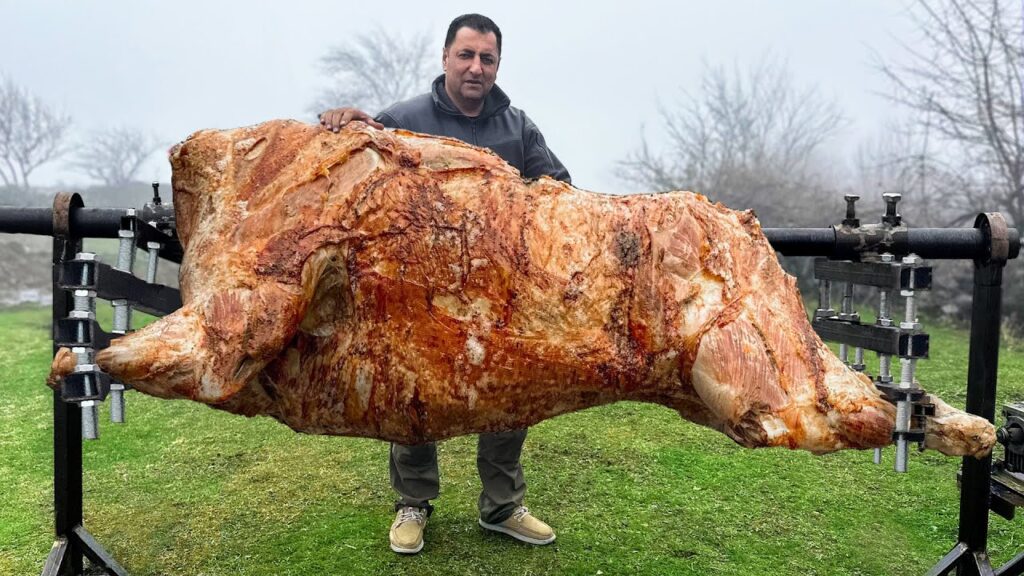
Some details: you’ll notice the metal spit’s rotation ensuring even doneness. The cooking goes on likely for hours; that slow time is part of the flavour. The fat of the bull drips, causing bursts of flame, smoke billows, the exterior crisps while the inside remains tender. The video emphasises that patience pays. And you’ll see the final result: thick slices of meat, reddish-pink inside, dark crust outside, juicy and flavourful.
The title’s claim “The Best Meat I’ve Tasted” is a bold one—but the video makes a convincing case. Of course, taste is subjective, but the visuals support a strong case: the crust, the juices, the sheer volume of meat being handled with respect. The cook doesn’t rush. The meat isn’t over-processed or fussed with — it’s allowed to show its natural character, elevated by fire and steel.
In terms of production, the video is well done: good camera work, nice cut-aways, ambient sound of fire and slicing, and a pace that doesn’t rush you. It invites you to linger. The editing lets you witness moments like the bull being mounted, the fire starting, the spit turning, close-ups of meat being carved. Each stage is given time. It doesn’t feel artificially sped up (though some long-haul cooking is inevitably time-lapsed). But the feel remains authentic.
For viewers, there are a few take-aways or inspirations:
- The power of big-scale roasting: Using a whole animal changes everything – scale, presentation, duration, communal feel.
- The importance of patience and control: the spit rotation, fire maintenance, balancing crust and interior doneness.
- The visceral sensory appeal of meat and fire: seeing the crust form, antibodies of fat sizzle, juices drip.
- The value of tradition and gathering: outdoors, big appetite, shared food, rustic setting.
- How visuals can evoke taste: even though you can’t smell or taste through the screen, you can almost imagine it, and that’s powerful.
For you (if you watch), here are a few tips to get more out of it:
- Watch full screen if you can — the scale and the detail benefit.
- Wear headphones if possible — the audio of fire, crackle, metal, slicing adds immersion.
- Pause on some of the close-up sections (for example the crust forming, the carving) to really soak in texture and detail.
- If you’re into cooking techniques, take note of how the spit is built, how fire is distributed, how the meat is mounted and rotated.
- If you’re more into food culture, reflect on how this kind of cooking brings people together, celebrates meat, and uplifts not just flavour but ceremony.
In conclusion, “Roasting a Huge Bull on a Steel Spit! The Best Meat I’ve Tasted” is a compelling watch for anyone who loves cooking, meat, outdoor roasting, or simply powerful food visuals. It’s not light-snack viewing—it’s feast-viewing. It’s long, bold, flavour-rich in its imagery, and satisfying in its completion. Whether you’re craving inspiration for your own big-scale cooking project, or simply want to be amazed by what fire, steel and a whole animal can produce, this video delivers.