In a recent meeting at the White House, President Donald Trump publicly defended Saudi Crown Prince Mohammed bin Salman regarding the assassination of journalist Jamal Khashoggi. The remarks come amid renewed scrutiny of US‑Saudi ties and human‑rights concerns.
Trump’s comments centred on a reporter’s question about Khashoggi, who was killed in the Saudi consulate in Istanbul in October 2018. According to US intelligence agencies, the crown prince likely approved the killing. TIME+2The Guardian+2 Yet Trump said: “A lot of people didn’t like that gentleman … Whether you like him or didn’t like him, things happen. But [the crown prince] knew nothing about it. And we can leave it at that.” The Washington Post+1
The phrase “things happen” caught attention — as a somewhat dismissive turn of phrase when addressing an event that many consider to be a heinous murder. Critics argue that this response undermines accountability and devalues the gravity of the crime. Indeed, an editorial described the comments as “weak, crass and of no strategic benefit to America.” The Washington Post
Context and significance
The Khashoggi killing unleashed global outrage. Khashoggi, a US‑based journalist and critic of the Saudi government, entered the Saudi consulate in Istanbul and never emerged. Western intelligence concluded that Saudi agents carried out the murder, and many believe that the crown prince had a role. Wikipedia+1
The meeting at the White House and Trump’s remarks signal a recalibration of US‑Saudi relations. The crown prince and the US are pursuing expanded cooperation: defense deals (including advanced fighter jets), nuclear energy partnership, major investments in the US, and a broader strategic alliance. For example, reports indicate Saudi investment pledges rising toward US$1 trillion and clearance of arms sales including F‑35 jets. The Guardian+1
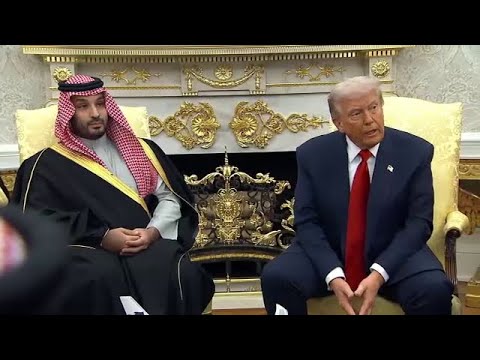
From Washington’s vantage point, Saudi Arabia remains a key geopolitical partner: in the Middle East posture, energy markets, counterterrorism, and now emerging technologies. From Riyadh’s perspective, rehabilitating its global image post‑Khashoggi and attracting foreign investment are vital.
Why the defence matters
For Trump, the defence of the crown prince serves multiple purposes: strengthening personal diplomatic ties, signalling to allies and adversaries that the US will support major partners despite controversies, and prioritising strategic/financial interests over human‑rights criticisms. The warm welcome extended to the crown prince—military honours, public praise, arms deals—underscores a transactional realpolitik approach. The Washington Post+1
On the other hand, observers say the message is perilous: it suggests that severe human‑rights violations may go unpunished if the perpetrator is geopolitically useful. The editorial from The Washington Post argues that this not only tarnishes American credibility but also emboldens authoritarian actors globally. The Washington Post
Key quotes and messages
- Trump: “Whether you like him or didn’t like him, things happen.” The Guardian+1
- Trump about the crown prince: “He knew nothing about it.” AP News+1
- Crown Prince Mohammed: “It’s painful and it’s a huge mistake … we are doing our best that this doesn’t happen again.” The Washington Post
Reactions and ramifications
The remarks immediately triggered backlash. The widow of Khashoggi called the approach “shameful” and said she still seeks accountability and the recovery of her husband’s remains. The Washington Post Human‑rights advocates warned that such overt rehabilitation of the crown prince sends the wrong signal—that economic interests trump justice.
On the strategic front, the strengthened US‑Saudi partnership might reshape regional dynamics: arms sales to Saudi Arabia raise concerns for Israel (which has long held a qualitative military edge) and highlight US‑China technology transfer risks if Saudi ties with China deepen. The Guardian
Domestically in the US, the decision to downplay the Khashoggi case could become a point of contention for Congress, civil‑society actors, and media. Opposition voices argue it neatly bypasses the intelligence assessment that the crown prince ordered the killing. TIME
What this means going forward
- US foreign‑policy precedent: The episode may establish an expectation that strategic allies may receive minimal accountability for serious abuses—raising questions about principles vs pragmatism in US diplomacy.
- Saudi image rehabilitation: The crown prince’s Washington visit, lavish honours and reinforcing of ties reflect slowly re‑integrating Saudi Arabia into the global diplomatic fold despite the Khashoggi crisis.
- Media & public accountability: By calling a journalist’s question “insubordinate” and attacking the news outlet’s licence, Trump shifted focus from substantive inquiry to media criticism. Critics say this undermines press freedom and obscures moral scrutiny. The Washington Post
- Strategic investment and arms deals: The broader economic‑defence agenda is likely to accelerate—Saudi investment in US industry, technology partnerships, and major arms sales all hinge on this warmer relationship. But debate remains whether such deals are worth the reputational cost.
- Regional diplomacy shift: With Saudi Arabia being courted for normalization with Israel under the umbrella of the Abraham Accords (though progress remains uncertain), the US‑Saudi axis could become more central in Middle‑East architecture—even as human‑rights concerns linger. The Guardian
Conclusion
The video you shared and the accompanying public remarks capture a pivotal moment in US‑Saudi relations: one where strategic interests are placed front and centre, with human‑rights concerns taking a back seat. Trump’s “things happen” line may sound casual, but symbolically it signals a tolerance of grave wrongdoing if wielded by a geopolitically useful partner. For advocates, journalists, and international observers, the question becomes: at what cost does stability and strategic cooperation come? And what happens when accountability is sidelined?