This video opens with the dramatic yet time‑honored spectacle of cooking a whole lamb on a rotating spit over open flame. The setting is outdoors, wood‑fired, rustic and yet precise: the kind of slow‑roast, large‑scale preparation that delivers flavour in depth and grandeur more than everyday grilling. From the outset, the title promises “most flavorful”, and what follows attempts to deliver on that promise through technique, timing, and visual appetite.
Preparation & Setup
The video shows the entire lamb mounted on a large spit rod, turning slowly above coals or fire‑wood embers. The slow rotation ensures even cooking, prevents one side from burning, and allows the fat and drippings to baste the meat continuously. This method is a classic for whole‑animal roast; it highlights the primal joy of cooking large pieces of meat over fire. The environment—open air, drifting smoke, visible embers—adds authenticity and sensory appeal.
In addition to the mechanical setup, one sees seasoning or marinade steps (though the video may not dive deeply into each ingredient). The lamb’s skin and outer surface develop a rich crust as it rotates, while the interior remains juicy and tender. The contrast of textures — crisp outer layer, succulent inner meat — is one of the main draws.
Cooking process & flavour development
Because the lamb is whole, the internal cooking is slower; heat must penetrate the mass, and as the spit turns, the varying exposure ensures the entire piece receives flame, radiant heat and indirect cooking moments. This method encourages the fat to render, the connective tissues to soften, and for the meat to self‑baste in its juices. The video emphasises watching the colour and the slow transformation: from raw pale flesh to golden brown, succulent roast.
Smoke from the fire infuses the lamb with a woody, char‑kissed flavour. The rotation means the lamb is not simply seared on one side then flipped; rather the continuous turn brings even exposure and constant motion. This helps prevent scorching and allows the cooking to be uniform—important when doing a whole animal.
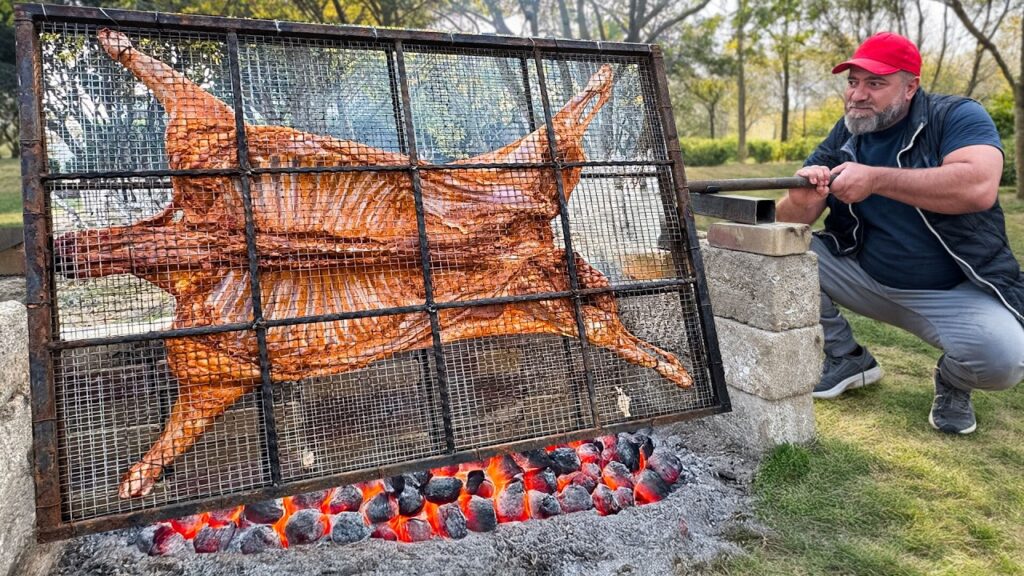
The video also reinforces that patience matters: this is not a quick grill. Time is required for the large mass of meat to cook through without drying out the outer layer or undercooking the inner. The result: deep flavour penetration, tenderness, and the “wow” factor of whole‑animal presentation.
Visual appeal & presentation
One of the strongest selling points of the video is how visually striking the whole‑lamb roast is. Seeing a full lamb rotating, the golden crust forming, juices glistening and smoke curling adds to the anticipation of flavour. The moment of carving, revealing the rosy‑pink interior, is gratifying. For viewers who love food and spectacle, this ticks all the boxes.
The video doesn’t just show cooking; it shows the result, the yield: the meat being carved, served, the audience of hungry diners, the communal and celebratory feel of a whole‑lamb roast. The scale implies a gathering, a feast, not just a backyard meal — it’s social, ceremonial, indulgent.
Why it stands out & what to learn
- Scale and technique: Many grill videos focus on small cuts (steaks, ribs, burgers). A whole lamb raise the stakes — technique must be more disciplined (heat management, rotation speed, exposure, timing). The video offers a lesson in scale: if you’re willing to commit, you get dramatic flavour and presentation.
- Depth of flavour: Using a whole animal means more fat, more variation in texture, more natural juices. The video emphasises the rewards: crispy skin, juicy meat, smoky flavour, slow‑cooked succulence. For someone looking to deepen their grilling game, this offers a step‑up in flavour potential.
- Outdoor cooking as event: This isn’t just dinner; it’s a feast. The video invites the viewer to consider outdoor cooking, fire‑roasting, communal meal preparation. It’s inspiring for those who like to entertain or treat grilling as an experience, not just a quick cook.
- Visual & sensory storytelling: The video uses visuals of fire, smoke, turning spit, carving, serving — all of which build appetite and excitement. For food content‑creators or food lovers, the filming emphasises that equipment and setting matter: a rotating spit, open fire, and whole‑animal roast convey a premium feel.
Considerations / tips from the video
- Ensure your setup is safe and stable: a whole lamb on a spit requires sturdy supports, adequate clearance, and constant attention to heat and rotation.
- Manage the fire: use indirect heat zones so the lamb doesn’t burn on one side; embers rather than large flames give better control.
- Monitor doneness: despite the spectacle, ensure the lamb is cooked fully but not overcooked — internal temperature and texture matter.
- Let rest: after roast, letting the meat rest before carving helps retain juices.
- Presentation matters: carving in front of guests, offering various cuts from the lamb (leg, shoulder, ribs, etc) enhances the experience.
Cultural context
Roasting whole lambs is a tradition in many cultures: for example, the North African dish Méchoui involves spit‑roasting a whole lamb or sheep in an earth oven. Wikipedia While the video may not explicitly reference that tradition, it fits that lineage of large‑scale, celebratory cooking. Recognising that heritage adds depth: you’re not just grilling, you’re participating in a tradition of communal roast and celebration.
Final thoughts
If you’re looking for a video that combines impressive cooking technique, delicious outcome, visual spectacle and outdoor feast‑vibes, this one hits the mark. It will appeal to anyone who loves grilling, wants to level up from standard cuts, or enjoys the showmanship of large‑format cooking. The link above gives you full access.
If you like, I can pull out key timestamps (e.g., when seasoning begins, when the crust forms, when carving starts) and highlight the most “must‑watch” moments. Would you like that?