Step into the heart of raw nature with this striking footage: “Crocodile Attack at the Watering Hole”. The scene unfolds at a seemingly calm watering hole—a place of respite for thirsty animals—but as you’ll see, it’s also a zone of danger, where life and death play out in dramatic fashion.
https://youtu.be/mxI1vGAPxfA
Imagine a dusty savannah landscape: the midday sun beats down, the air shimmering above the flat terrain. A group of animals gathers at the water’s edge, alert yet vulnerable. They have come to drink, to cool off, to survive. But nearby, hidden beneath the surface or low along the bank, lies one of nature’s most efficient predators—waiting, silent, invisible: the crocodile.
As the video opens, you’ll see how the predator uses its environment to perfect effect. Silent, motionless, half‑submerged, the crocodile watches with eyes and nostrils barely above water. Its body blends into the bank, its tail hidden in shadows. The moment a prey animal dips closer—head down, unaware—a lightning fast attack is unleashed. This is ambush at its finest: patient, ruthless, and efficient. The scene captures that exact moment when the worlds of predator and prey intersect.
What makes this footage so compelling is how it strips away any romantic notions of nature. This is predator‑prey dynamics in its purest, most unfiltered form. The watering hole isn’t just a tranquil oasis—it’s a battlefield. Each animal that approaches is at risk, especially when it lowers its guard to drink. The crocodile exploits that very vulnerability, using stealth and explosive force to secure a meal. According to wildlife experts, crocodilians rely heavily on ambush techniques: they favour high‑traffic areas like riverbanks or watering holes, where animals congregate and might let their guard down. Game Hunting Safaris+2Wikipedia+2
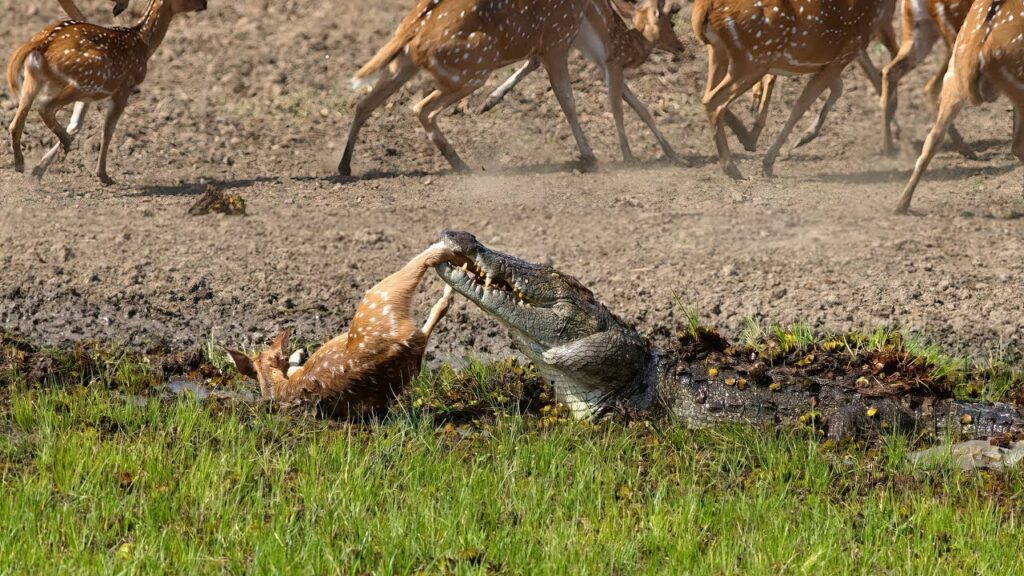
Another fascinating aspect in the video: the duality of the watering hole as both life‑giving and life‑threatening. On one hand, water is a necessity for all the animals present. On the other hand, it is exactly what draws them into the range of predators. The markdown of vulnerability begins the moment they step into that shared resource. This paradox—water as sustenance and as trap—is central to what makes the footage such a dramatic study in ecology.
If you watch closely, you’ll notice the body language of the animals around the hole: heads up, ears twitching, limbs poised. The slightest sense of danger causes them to freeze, to retreat a step. Meanwhile, the crocodile remains still, committed to waiting until the perfect moment to strike. It’s a study in patience: a predator who can sit motionless for extended periods and then move with stunning speed. This is reinforced by research that shows how crocodiles conserve energy while waiting for prey to come to them, rather than actively chasing. Game Hunting Safaris+1
When the attack happens, the visual contrast is haunting: the calm surface of the water is broken by sudden motion, jaws clamp, water splashes, the prey struggles. The fight for survival becomes immediate and urgent. Viewers watching will feel that surge of adrenaline, that sense of witnessing something raw and real. It’s not theatrical, it’s not sensationalised—it’s nature. And nature doesn’t hold back.
Beyond the thrill of the moment, this video offers an educational opportunity to reflect on broader themes: adaptation, survival, ecosystem balance. The watering hole scenario highlights key survival strategies: the prey animals must balance the need for water with the risk of exposure; the predator capitalises on that need. For educators, wildlife enthusiasts, or safari dreamers alike, this footage becomes a doorway to ask questions like: How do animals adapt to risk? What does it take to survive in an environment where every necessity carries danger?
If you’ve ever dreamed of stepping into the wild—to go on safari, to see animals in their natural habitat—this video is a compelling foretaste. It reminds us that wild landscapes are not just scenic backdrops, but dynamic theatres of survival. The next time you imagine a peaceful watering hole, think of the unseen dynamics beneath the surface.
For your channel, this video can serve multiple purposes:
- Thrill and adventure – it grabs attention with dramatic visuals.
- Nature documentary value – it educates about predator‑prey behaviours, ecosystem interdependence, survival strategy.
- Conservation message – it shows how fragile life is in the wild, and underscores the importance of respecting and protecting such habitats.
- Safari inspiration – for viewers who dream of wildlife photography or travel, this footage offers real‑life insight into what a safari might truly reveal—a mix of beauty, tension, and truth.
Here’s a suggested call to action you could include in your video description or at the end:
“If you enjoyed this raw encounter at the watering hole, subscribe for more real‑wildlife footage, behind‑the‑scenes safari stories, and deep dives into nature’s most dramatic moments. Leave a comment: what surprised you most about this predator‑prey interaction? Would you be brave enough to sit near a watering hole on a safari—knowing what could be beneath the surface?”
Finally, a note on tone: While the video is intense, it’s also respectful of wildlife. Avoid sensationalising or anthropomorphising. Instead, focus on the natural behaviours, the survival frame, the ecosystem context. Viewers who appreciate genuine wildlife content will respond well to authenticity and insight.
In summary: “Crocodile Attack at the Watering Hole” offers a powerful, raw look at the balance of nature—where water brings life and threat in equal measure. Share it, discuss it, learn from it—and if it moves your audience, invite them to explore more of the wild with your channel.
Thanks for creating content that brings the wild closer to us. Here’s to many more unforgettable moments in nature.
👉 Watch the full video here: https://youtu.be/mxI1vGAPxfA